UNESCO's Four Pillars
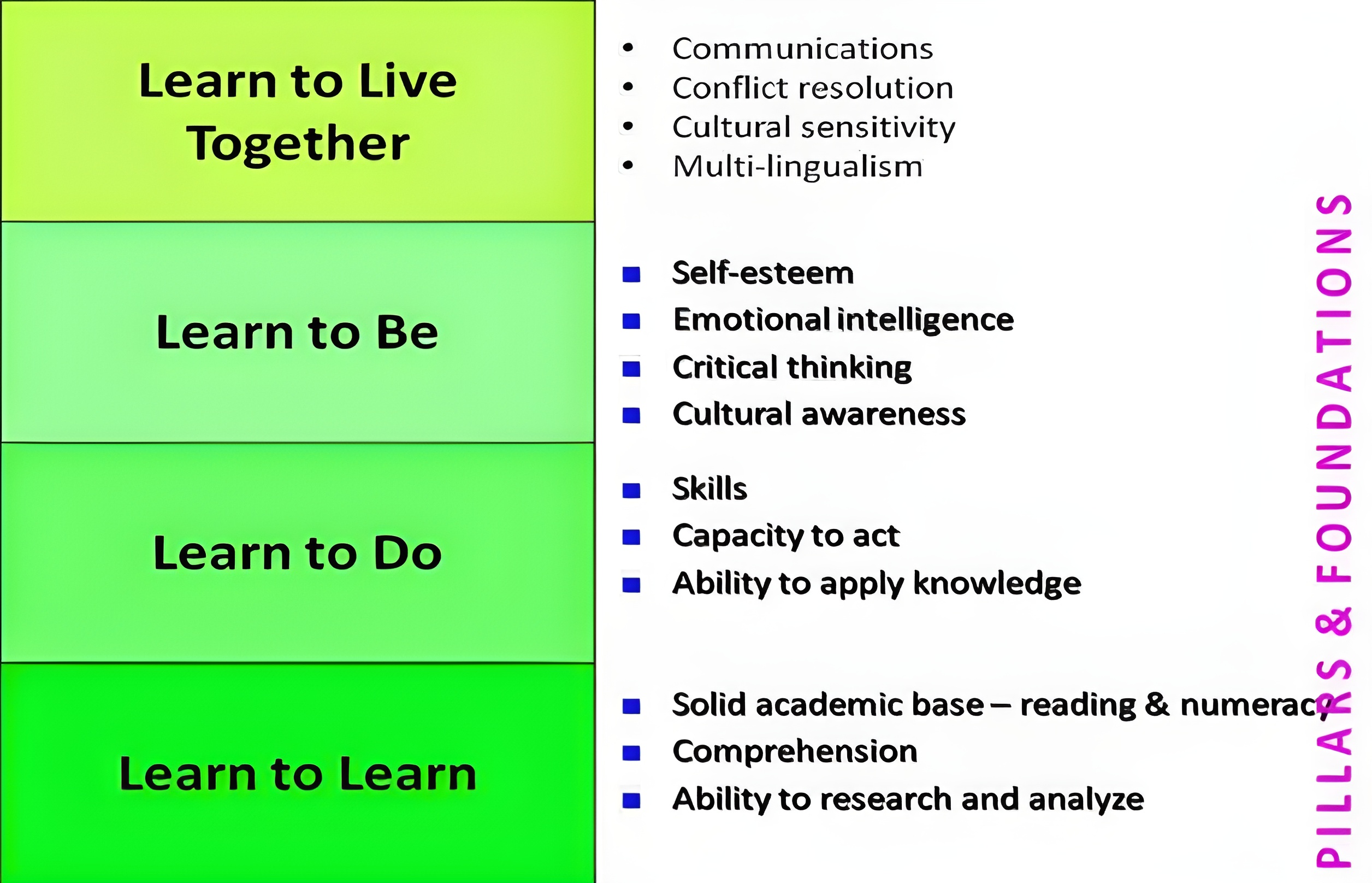
UNESCO’s “Four Pillars of Education” is a holistic framework proposed by the Delors Commission to guide lifelong learning. It emphasizes that education should be a continuous, lifelong process rather than mere rote memorization.The four fundamental types of learning are:
Learning to Know
Focus: Acquiring, understanding, and mastering instruments of knowledge.
Goal: Developing the power of reasoning, critical thinking, and the joy of understanding the world.
Learning to Do
Focus: Developing practical skills and vocational competence.
Goal: Enabling individuals to creatively apply their knowledge in real-life situations and the workplace.
Learning to Live Together
Focus: Developing practical skills and vocational competence.
Goal: Promoting peaceful coexistence, cooperation, and respect for diversity in an increasingly globalized world.
Learning to Be
Focus: Holistic personal development (mind, body, and spirit).
Goal: Nurturing greater autonomy, self-confidence, judgment, and personal responsibility.
PRME Principles
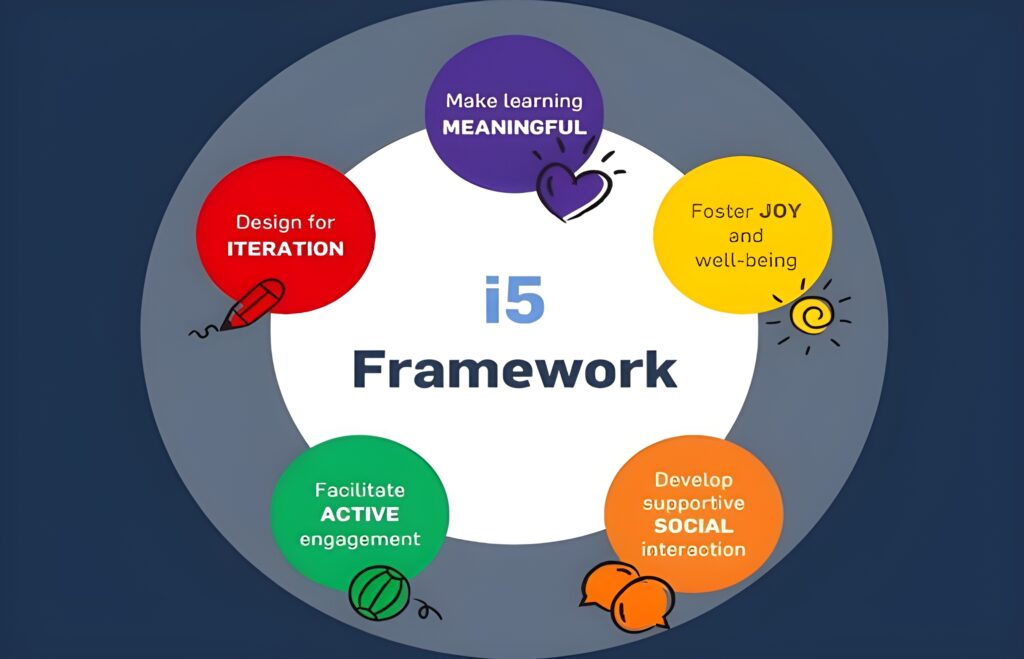
The program will be guided by the PRME i5 – the Impactful Five framework, which fosters playful learning and the development of five essential skills: Cognitive, Emotional, Creative, Social, and Physical. Designed to make learning meaningful, the framework promotes active engagement, iteration, supportive social interaction, and a sense of joy and well-being.
- Purpose: Develop students into future generators of sustainable value for business and society, driving an inclusive global economy.
- Values: Embed the values of global social responsibility (e.g., from the UN Global Compact) into academic activities and institutional practices.
- Method: Create educational frameworks, materials, and learning environments that enable effective responsible leadership.
- Research: Conduct conceptual and empirical research that advances the understanding of corporate impact on sustainable economic, social, and environmental value.
- Partner: Interact with business managers to explore and address shared social and environmental challenges.
- Dialogue: Facilitate and support debate among educators, students, business, government, consumers, and civil society on critical issues of social and environmental responsibility.
- Practice: Understand and model responsible management education within the institution's own governance and operations.
Assessment and Evaluation
Assessments will consist of written examinations, individual and small group projects, reports & presentations, assignments, attendance and class participation. Students should fulfil minimum attendance requirements to be eligible for participating in the Assessment & Evaluation components.
Students should fulfil prescribed minimum academic performance norms – course GPA, Term_GPA and Cumulative GPA for progressing into the next stage of the program.