
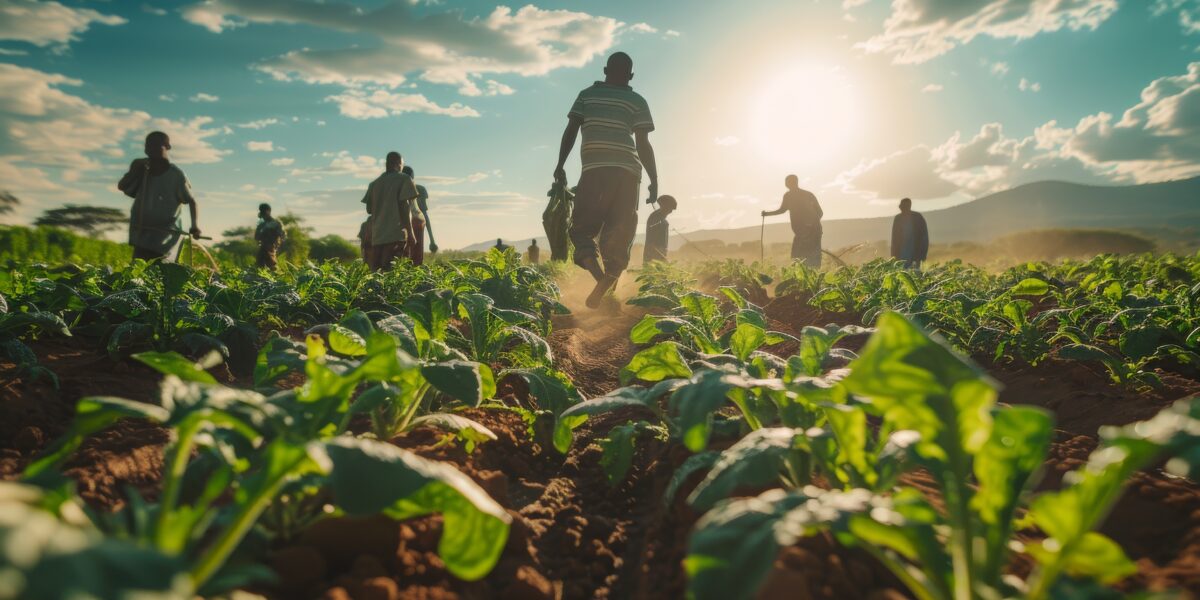
India’s Agri-Business Transformation
India is entering a new era of agricultural transformation driven by technology, market integration, sustainability, and organized supply chain systems. From farm production to food processing, storage, transportation, retail, and exports, every stage of the agricultural ecosystem increasingly depends on efficient supply chain management.
The rise of:
- Agri-business enterprises
- Food processing industries
- Farmer Producer Organizations (FPOs)
- Agricultural exports
- Cold chain logistics
- Digital marketplaces
has created significant demand for skilled professionals who can manage complex value chains efficiently and sustainably.
In this evolving landscape, supply chain leadership is no longer limited to logistics management—it has become a strategic function essential for economic growth, food security, and rural development.
The Challenges Facing India’s Agricultural Value Chains
Despite being one of the world’s largest agricultural producers, India continues to face critical supply chain challenges:
- Post-harvest losses
- Inadequate storage infrastructure
- Fragmented market systems
- Transportation inefficiencies
- Limited cold chain networks
- Price volatility
- Farmer income instability
These inefficiencies impact not only farmers but also consumers, exporters, processors, and the broader economy.
The need for professionally managed supply chains has therefore become central to India’s agricultural modernization agenda.
The Expanding Role of Supply Chain Professionals
Modern supply chain professionals must understand far more than procurement and distribution. They are expected to manage:
- End-to-end value chains
- Sustainability frameworks
- Inventory optimization
- Market linkages
- Demand forecasting
- Risk management
- Technology integration
- Rural enterprise ecosystems
In sectors such as agri-business and food systems, professionals must additionally understand:
- Agricultural production cycles
- Farmer institutions
- Cooperative systems
- Regulatory compliance
- Sustainable sourcing practices
This multidimensional role requires specialized education and practical training.
ASCI PGD–SCM: Creating Future Supply Chain Leaders
The Administrative Staff College of India (ASCI), with its long-standing reputation for leadership development and policy expertise, has introduced the PGD–SCM programme to address the growing need for professionally trained supply chain leaders.
The programme is uniquely positioned at the intersection of:
- Supply chain management
- Agri-business
- Sustainable development
- Collective enterprise management
It prepares graduates to work across:
- Cooperatives
- Producer companies
- FPOs
- Agri-business firms
- Food processing industries
- Development organizations
- Government initiatives
The curriculum combines conceptual learning with industry-oriented applications, enabling students to understand both operational and strategic dimensions of supply chain systems.
Sustainability and the Future of Supply Chains
Today’s supply chains are expected not only to deliver efficiency but also to promote sustainability, inclusiveness, and resilience.
Global concerns around:
- Climate change
- Food security
- Ethical sourcing
- Resource optimization
- Sustainable agriculture
have fundamentally reshaped how organizations approach supply chain management.
Professionals trained in sustainable supply chain systems are increasingly valued across industries and development sectors.
The PGD–SCM programme emphasizes sustainable development principles while preparing students for real-world management challenges.
Career Opportunities in the Emerging Agri-Economy
India’s rapidly expanding agri-business ecosystem offers diverse career opportunities in:
- Supply chain management
- Procurement and sourcing
- Rural enterprise development
- Food processing operations
- Agri exports
- Development consulting
- Cooperative management
- Sustainability advisory
With increasing investments in agriculture, food systems, and rural development, the demand for skilled professionals is expected to grow significantly in the coming years.
ASCI’s academic foundation, industry engagement, and leadership-oriented approach provide students with a strong platform to contribute meaningfully to this transformation.
Conclusion
India’s agricultural future depends on building resilient, inclusive, and sustainable supply chain systems. As the country moves toward a more integrated and technology-driven agri-economy, the need for professionally trained leaders will continue to rise.
The ASCI PGD–SCM programme represents a forward-looking educational initiative that aligns management education with India’s evolving developmental priorities.
By nurturing supply chain leaders capable of driving sustainable impact, ASCI continues to strengthen its legacy as one of India’s premier institutions for leadership and management excellence.